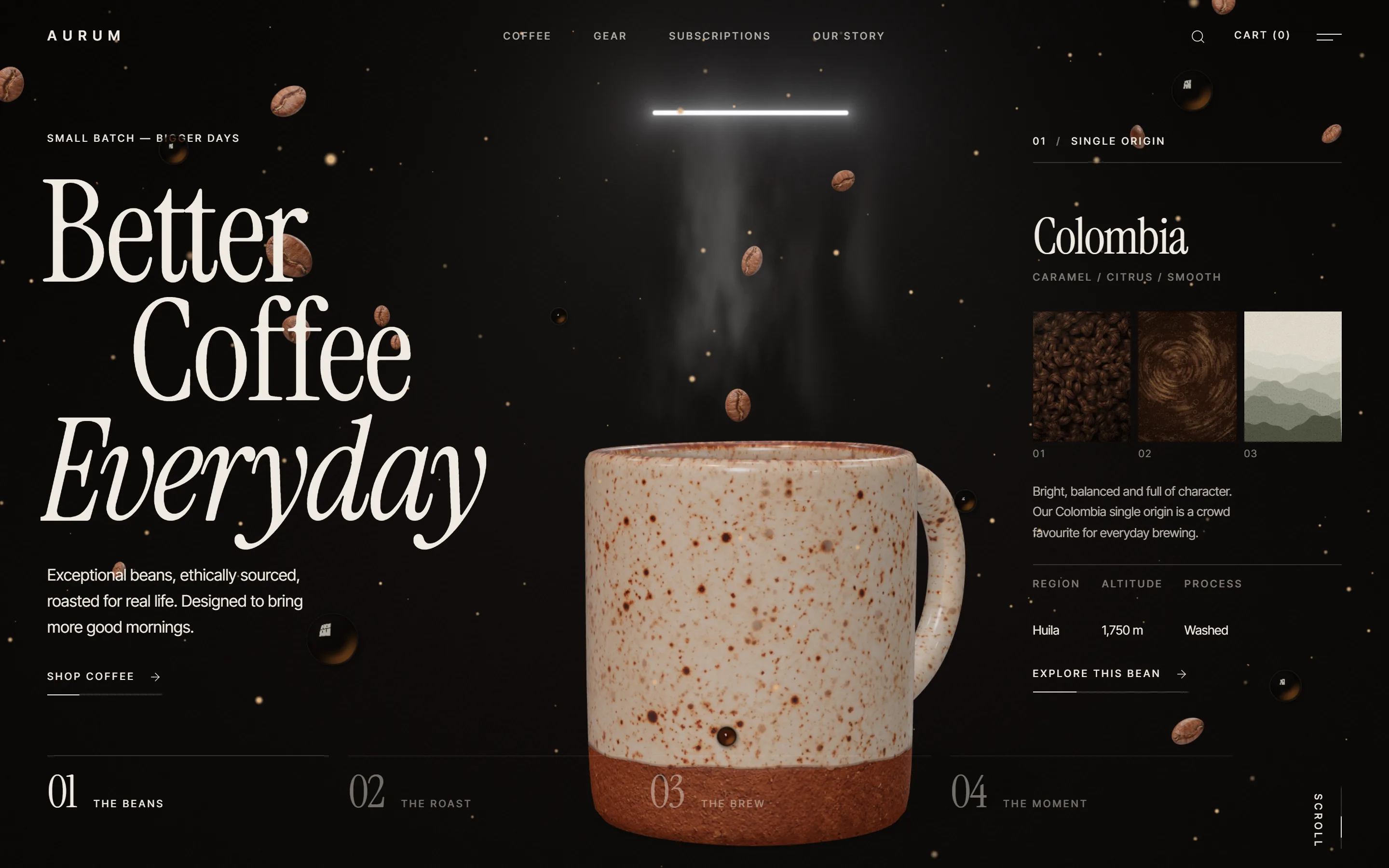
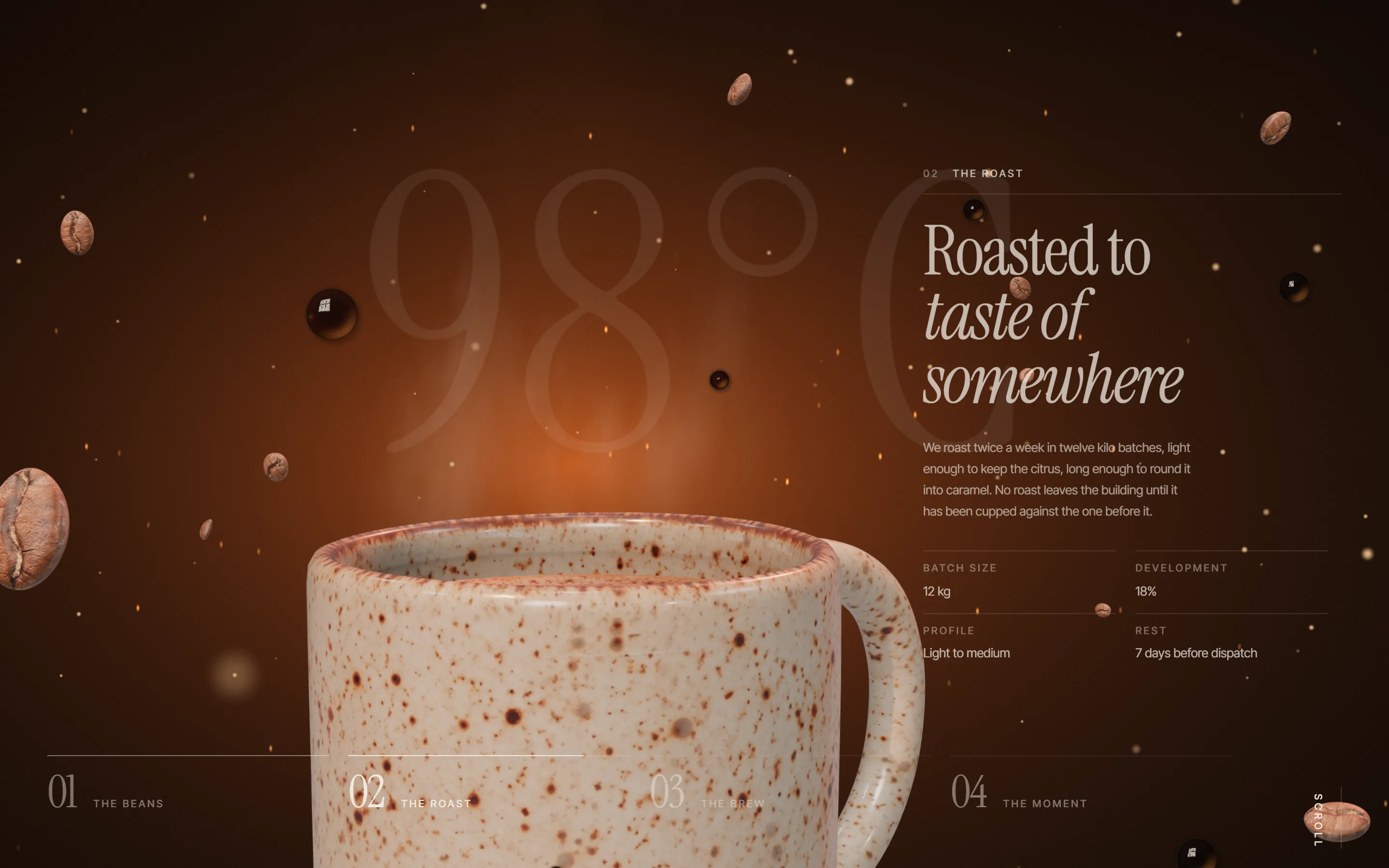
The top of the page is a tall section with the 3D scene pinned in place. As you scroll, your position becomes the scene's timeline. The camera orbits the mug, the light swings, steam rises, the background warms up, and the words for each chapter come and go.
Drag the mug and it spins, and it keeps its momentum. Move the mouse and the camera and light lean with you. Below the film sit the range, the subscription and the cart, like any coffee shop.
Why I did it that way
If an effect doesn't sell the coffee, it doesn't go in.
The camera moves, not the mug.
A mug spinning on a turntable looks like a product viewer. A camera moving around it, with the light changing, looks like an ad. That's the feeling a roaster wants.
Nothing stops dead.
The camera path is five key positions, one per chapter. They are joined with a smooth curve, so the camera glides through each one instead of stopping and starting.
Everything follows, nothing jumps.
Scroll and the mouse don't move anything directly. They set where things should be, and the scene eases its way there. That's why it feels heavy and calm instead of twitchy.
A mug I made, not a stock model.
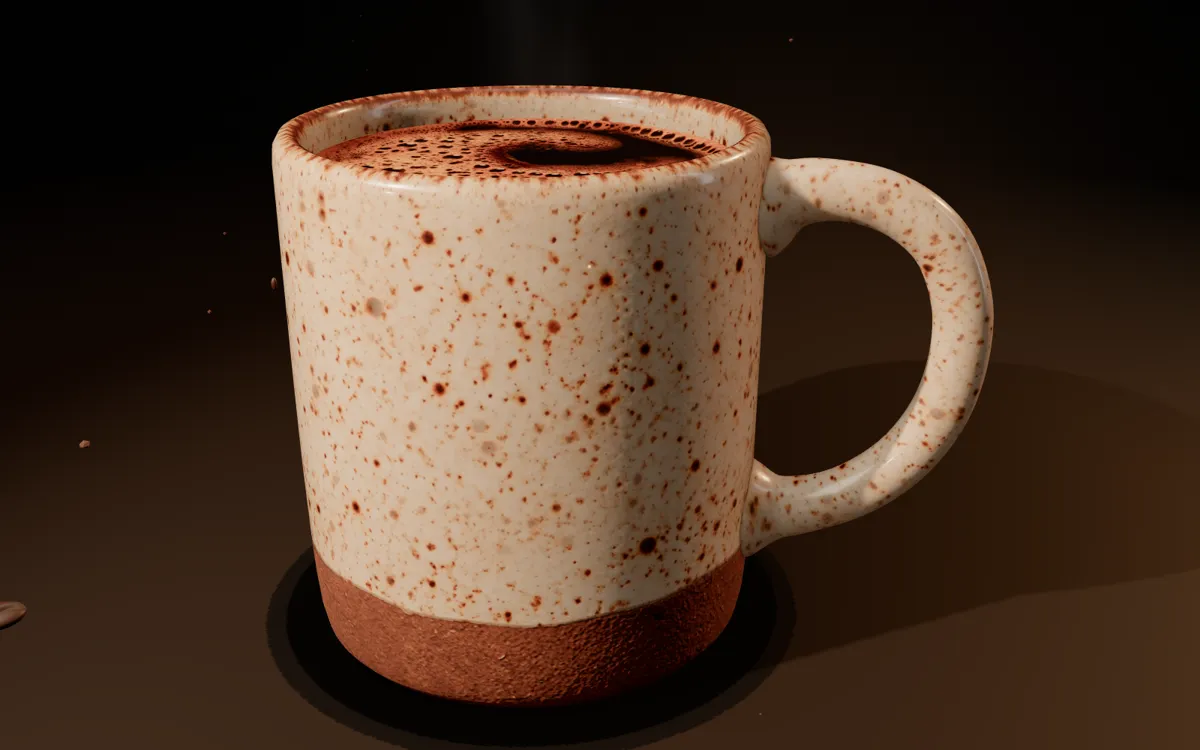
The mug is built in Blender by a script, matched to a reference photo: the speckled glaze, the bare clay base, the crema with latte art on top.
One word is enough.
Only The Roast chapter keeps a big word floating in the space behind the cup. One reads as a choice. Five reads as a gimmick.
It still works without it.
No 3D on the device? It shows a still photo instead. Motion turned off? It respects that. A short opening curtain holds until the mug's first frame is ready, so nobody sees it load.
On a phone
Five frames of one scroll.
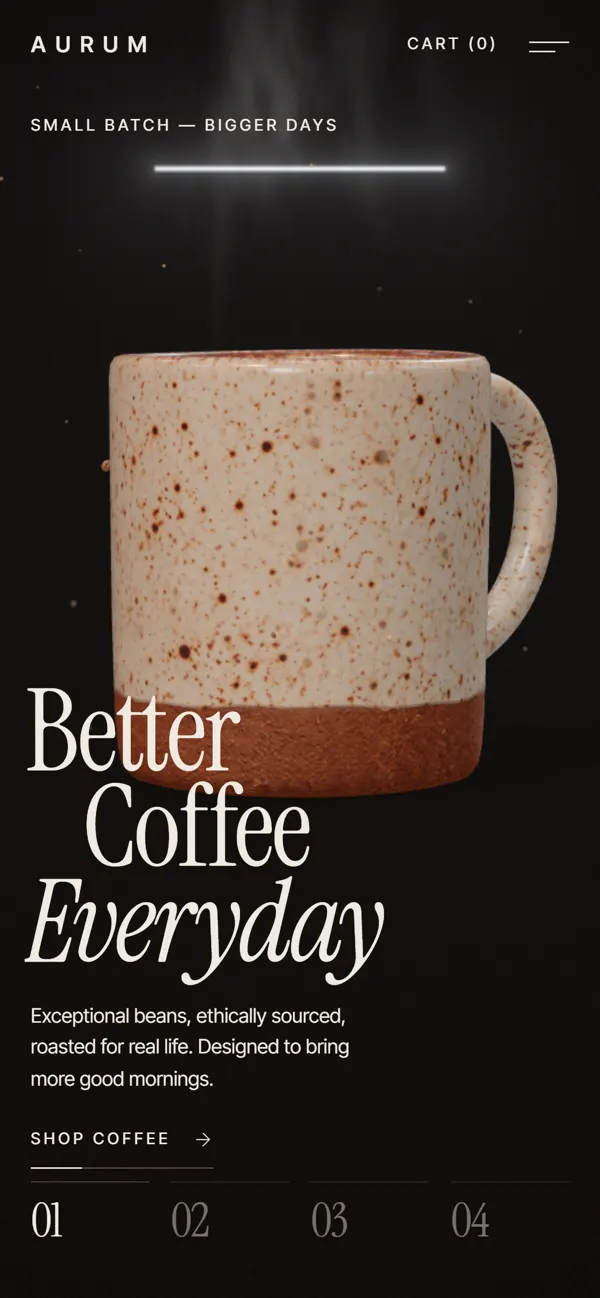
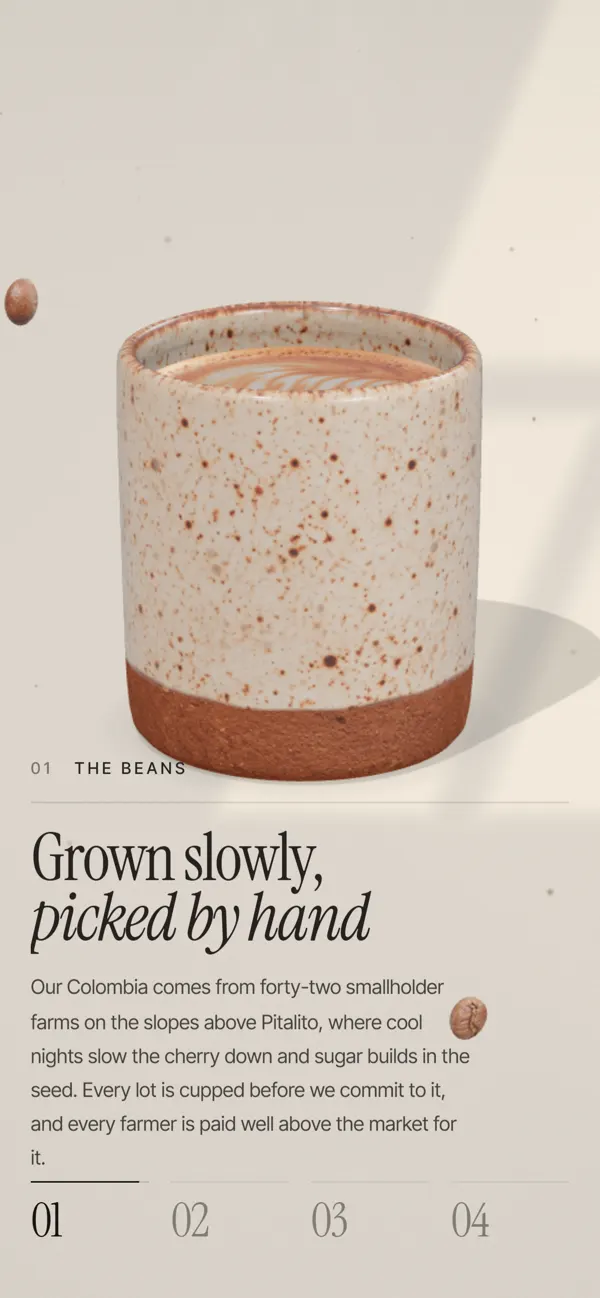
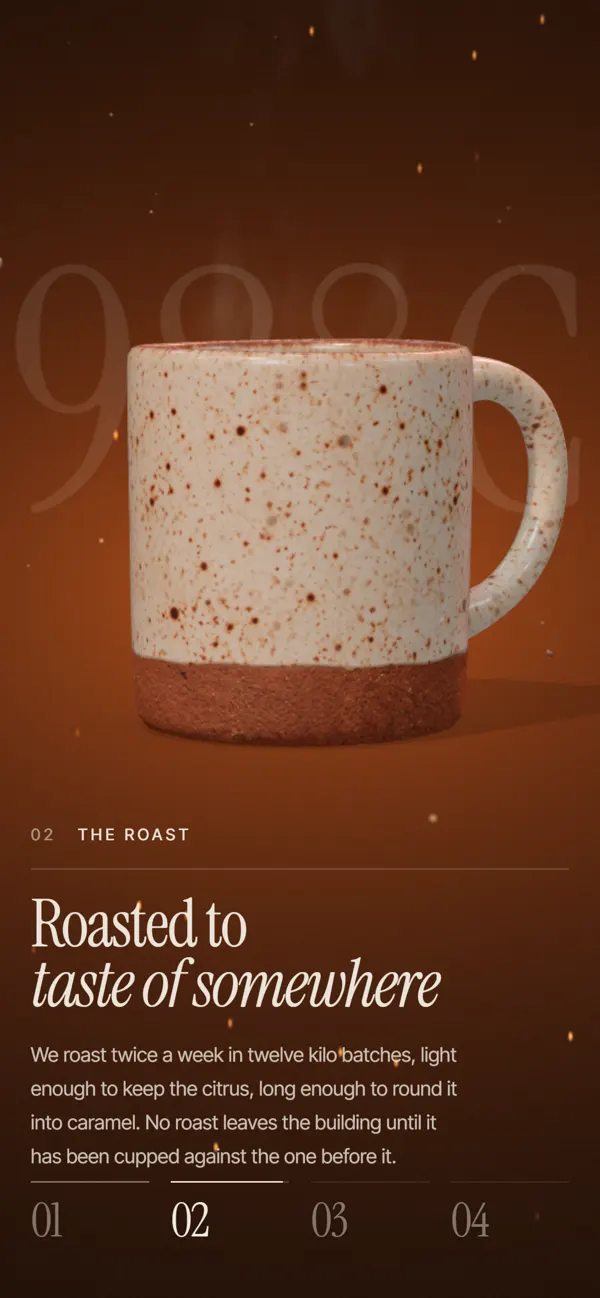
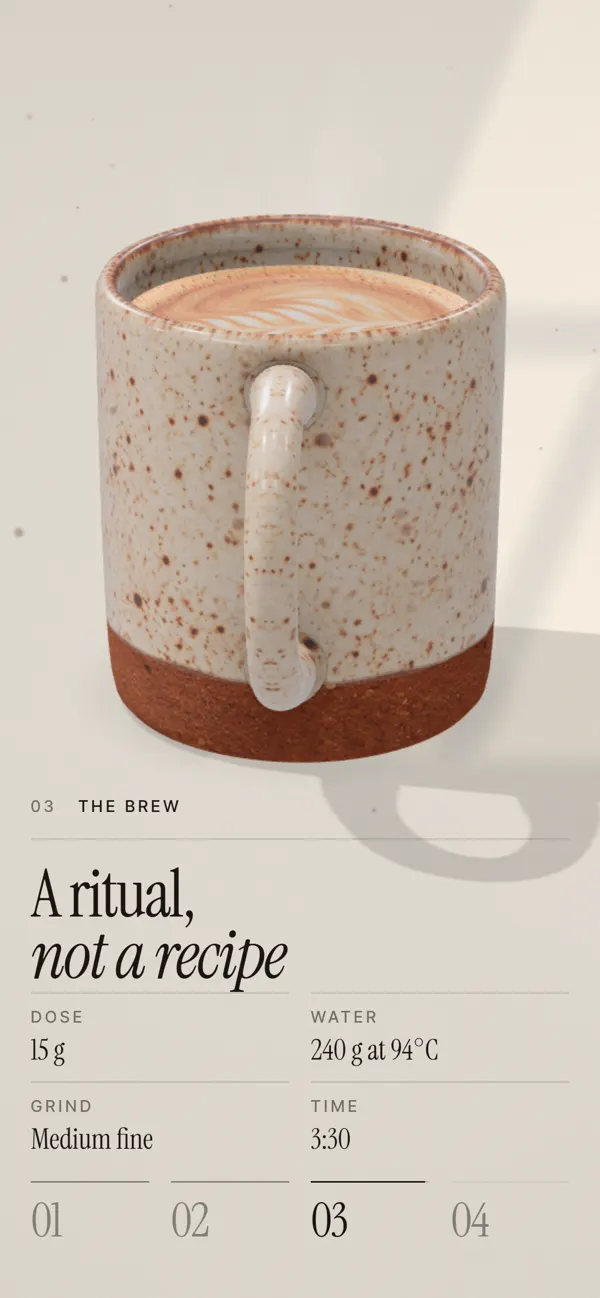
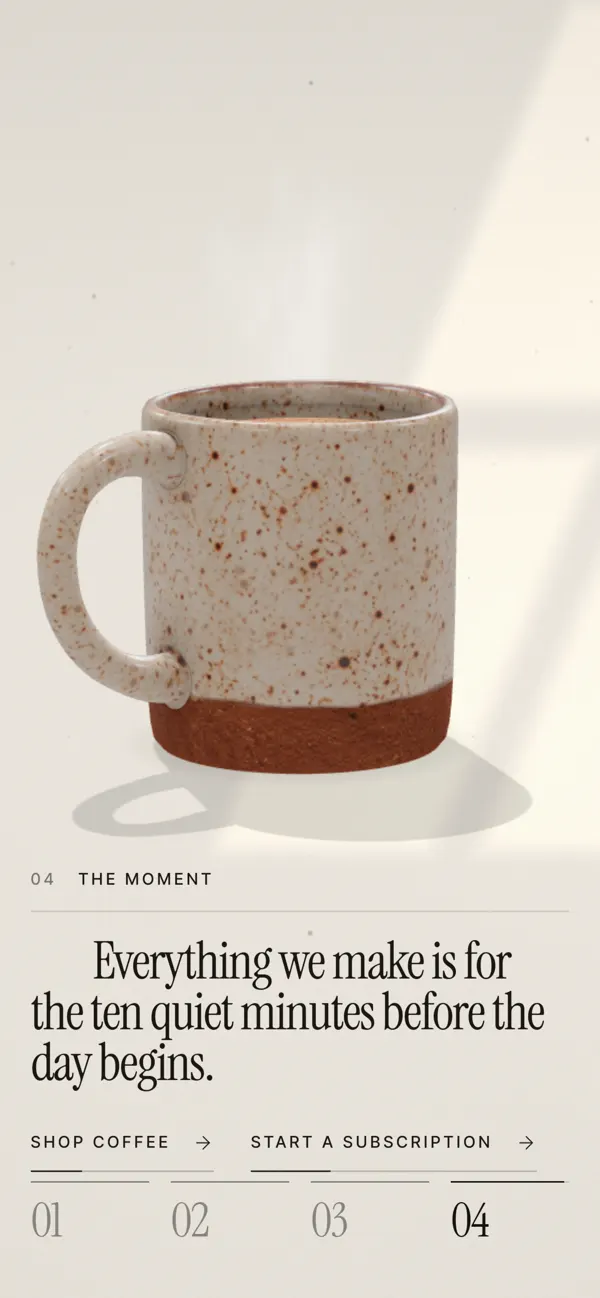
Phones get their own camera path. These are real captures, top to bottom of the film: the light, the backdrop and the angle all change while the mug stays the hero.
Arrival
The beans
The roast
The brew
The moment
Try it
Why it feels smooth.
Drag the slider like you're scrolling. The top dot goes exactly where you put it, which is how most sites move. The bottom dot is how Aurum moves: it eases there. The mug below is the real one from the site, and it turns the Aurum way.
Direct
Aurum
Arrival
Beans
Roast
Brew
Moment
The real 3D mug from the site, latte art and all. Move the slider to turn it.
What it gives them
What a product brand gets.
People remember it.Most product pages are a photo and a price. A page that plays like an ad is the one people send to a friend.
The story gets read.Each chapter only shows its words when the camera gets there, so the origin, the roast and the brew get read one at a time, not skimmed in a wall of text.
It still sells.Under the film is a normal shop: the range, subscriptions and a cart. The show leads into the buying, it doesn't replace it.
It holds up on any device.Phones get their own camera path. Older devices get a still photo. Nobody gets a broken page.