
Mads Kitchen ← Studio104

Meal planning · Shopping lists

The kitchen remembers so you don't have to.

Made to take the mental load out of the weekly shop. Mads picks the meals, and the app turns them into one shopping list, loaded into her chosen trolley ready to be delivered.

Built for one household first. Made properly, then shared.

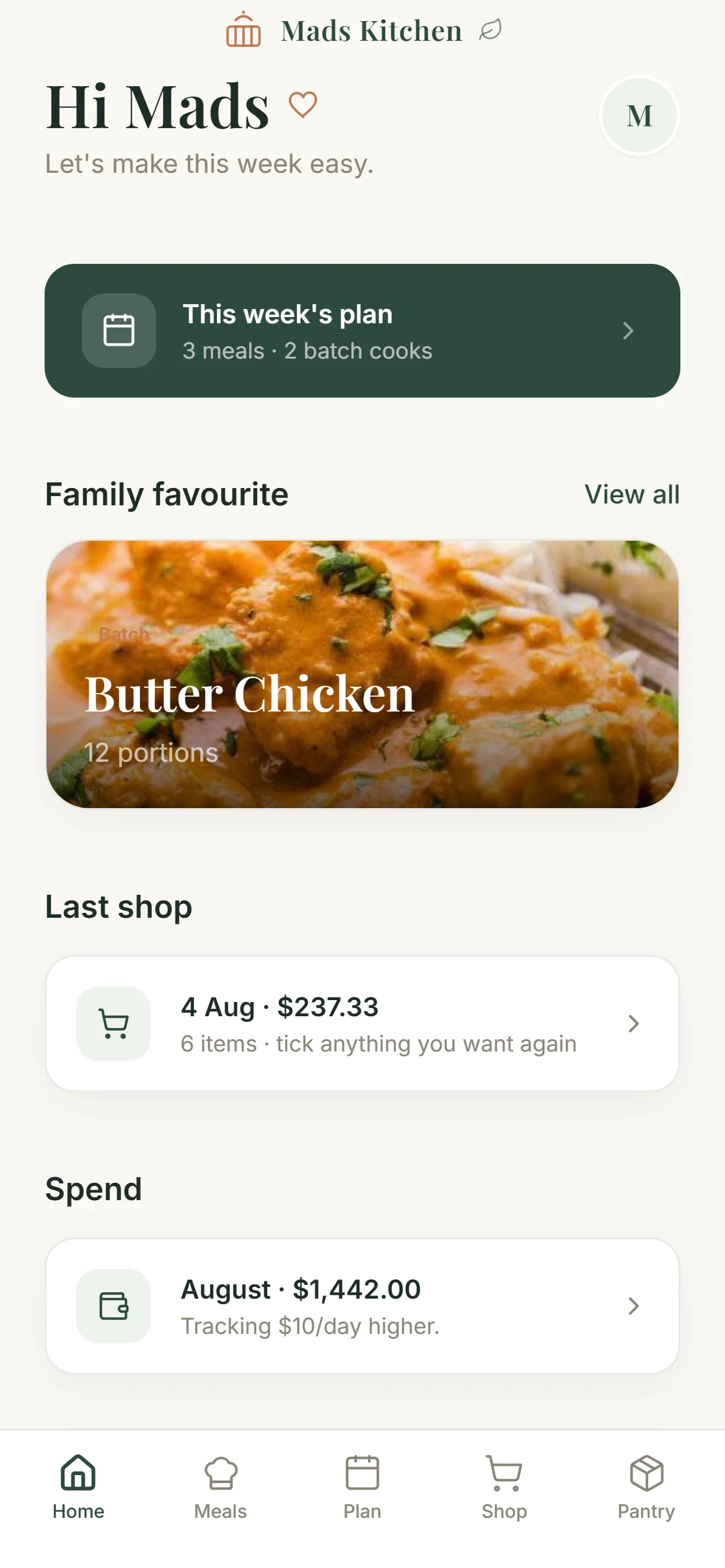
The Mads Kitchen home screen, showing the week and the last shop
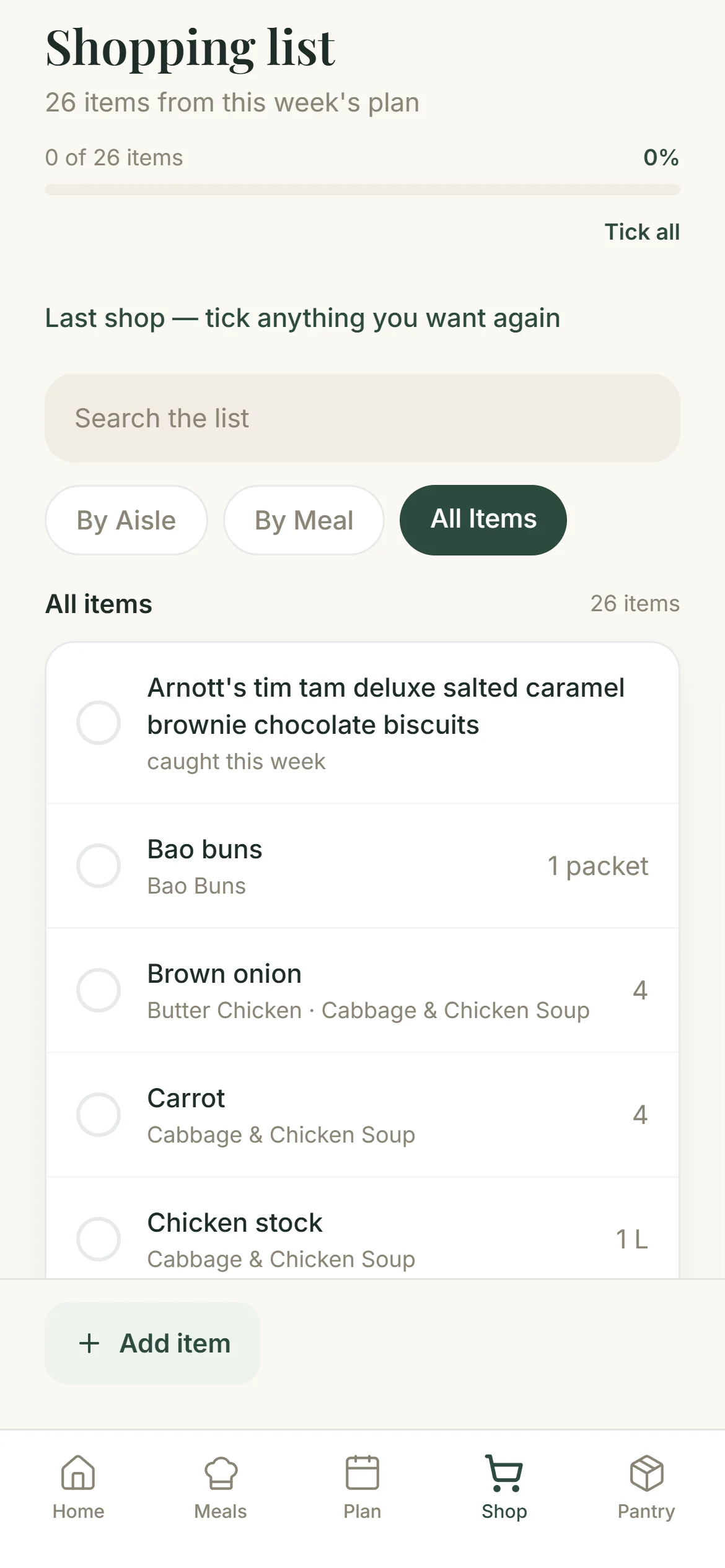
A shopping list of 26 items, grouped and ready for the shop
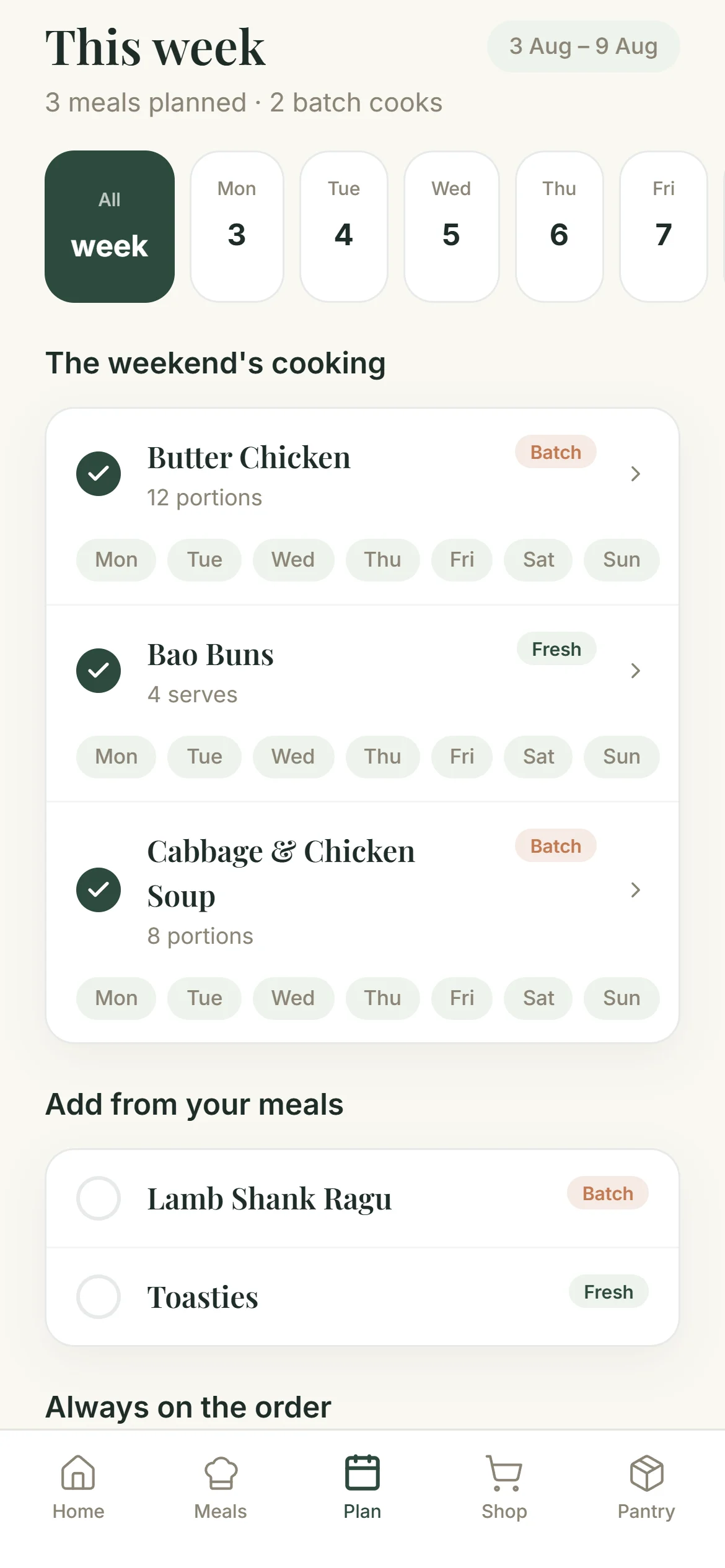
The week's plan, with three meals and two batch cooks
Swipe for all three →

Why it exists

To take the mental load out of the weekly shop.

The kitchen is Mads's domain. And no, this isn't one of those tragic trad-wife situations. Anyone who knows her knows she's a bit of a whiz in there, and cooking is her love language. It's the best. We love her. That's why I made her this.

What it does

It holds all the meals she loves to cook. She picks what she wants to make for the next week or two, and it does the rest. It isn't recipes and it isn't daily meal planning. It takes those meals and turns them into one list of ingredients.

That list lands in her supermarket trolley, already loaded. She picks a delivery date, hits send, and it's done, all from inside the app.

It knows what's already in the house

Walk through the pantry, fridge and freezer and just say out loud what's there, and it builds the list of what the house keeps. Run out of a spice? A quick voice note keeps it up to date. And the receipts do one more job: they itemise the shopping and split the spending into categories, so it's clear where the money goes.

The point

All of it exists for one reason: to take load off Mads's brain. She's an academic and a mum, and she already does so much thinking. If this lifts even part of that, it's done its job.
It stops at the supermarket door.

Mads Kitchen remembers meals. The supermarket remembers purchases. It does not rebuild checkout, payment, delivery or specials, because those already work and doing them again badly helps nobody.

The job is the ninety percent of the shop that happens before you open the trolley.

Your pantry

Walk the kitchen talking.

Say what is on the shelves as you go, paste it in, and it sorts itself into the same aisles your shopping list uses. Capturing the pantry is also how the app learns where things belong on the order.

It remembers what you keep

  • Cumin pantry · spice
  • Fish sauce pantry · condiment
  • Puff pastry freezer · bakery
  • Parmesan fridge · dairy

Not how much is left. A number like that is wrong by the next day and then you are keeping a spreadsheet instead of cooking. What you keep stays true until the household changes.

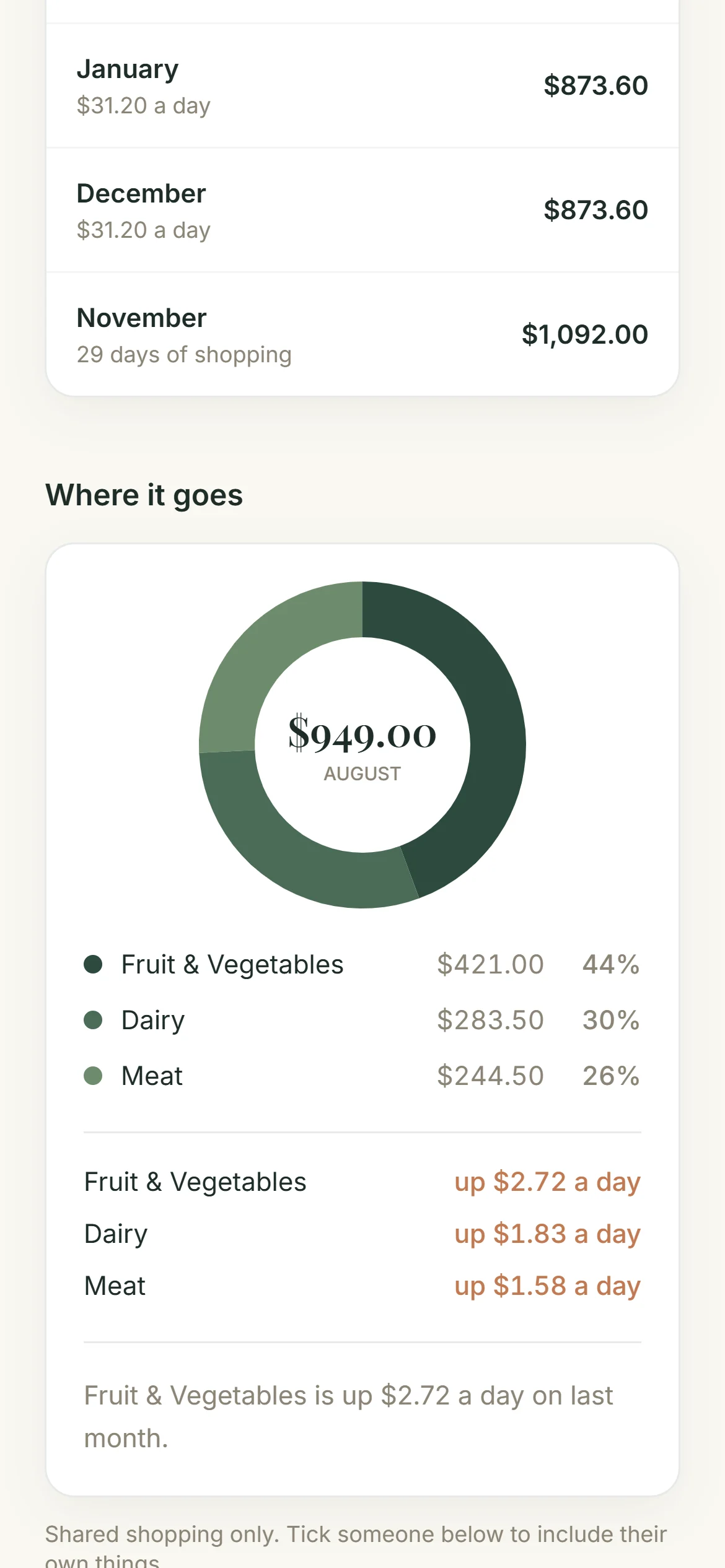
A ring chart of one month's shopping, split into fruit and vegetables, dairy and meat

Where it goes

The receipts already know.

Paste in the shop and the month draws itself: what you spent, what it usually is, and which few things moved. No budget to set up and nothing to keep feeding. The numbers are the ones you were already being sent.

It says drinks are up $9.67 a day rather than that you are over budget. One is a fact you can act on; the other is a telling-off from a spreadsheet.

Four steps, once a week.

  1. 01

    Plan the week

    Pick the meals and the serves. Batch cooks count for the nights they cover, so a Sunday curry is not four separate decisions.

  2. 02

    Get the list

    Every meal becomes one list, combined and sorted by aisle, with the staples you always buy already on it.

  3. 03

    Send it to the shop

    The finished trolley lands in the app you already shop with. Checkout, delivery and specials stay exactly where they are.

  4. 04

    Cook what is left

    Midweek, it looks at what you still have and suggests something that uses it up.

Want it for your kitchen?

It is in use in one household and not on the app stores yet. Leave your name and I will tell you when it opens up.

Ask for early access